
Fragrance Guide
The Complete Guide to Perfume Families
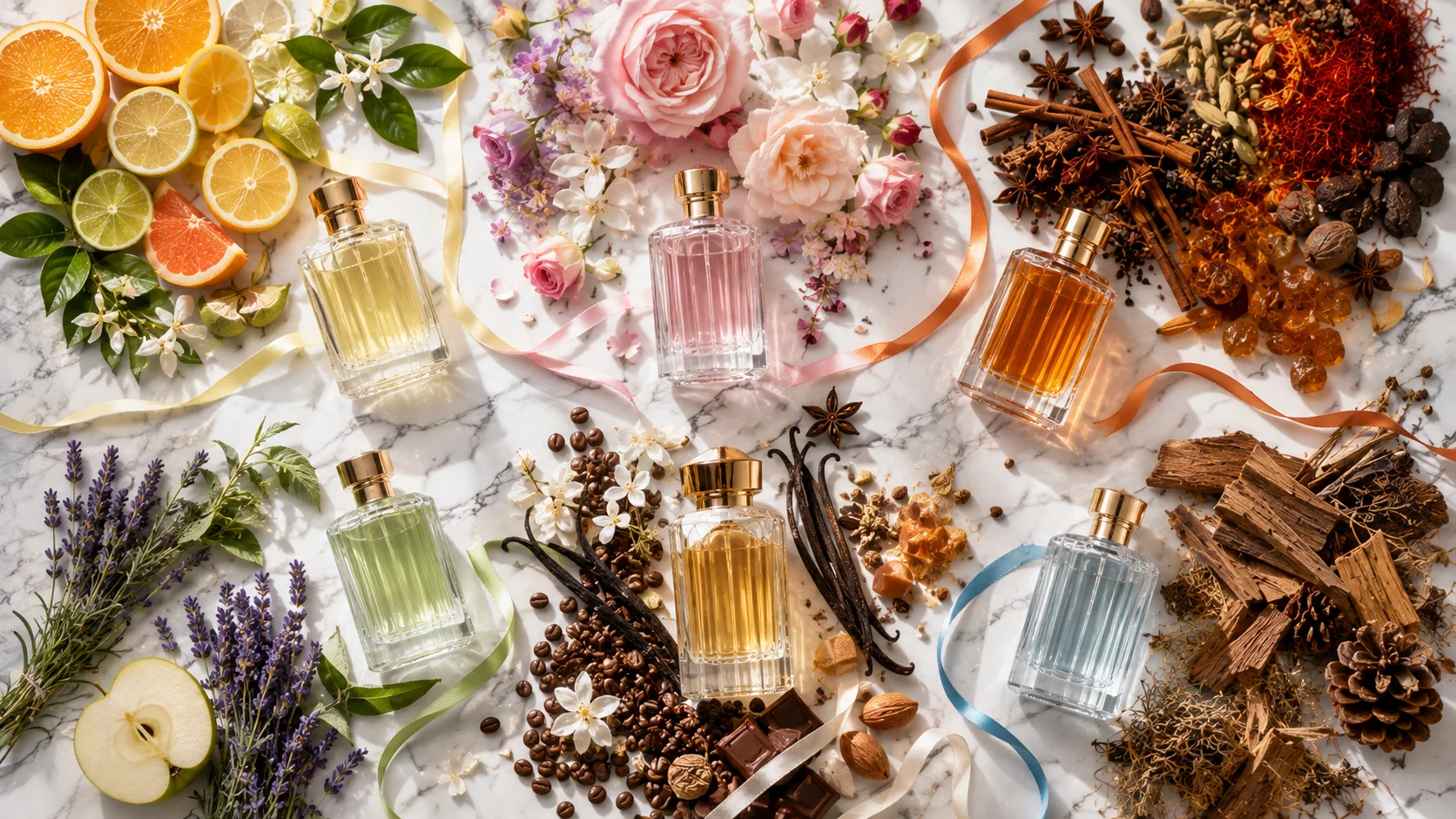
Not sure what fragrance family you prefer? Discover the major perfume families—from floral and fresh to woody, amber, spicy and gourmand—and learn how to find the scent profile that suits your personality, lifestyle and occasion.
Choosing a perfume can be overwhelming. There are thousands of fragrances available, countless individual ingredients, and descriptions filled with words such as floral, woody, citrus, amber, musky, fresh, spicy, and gourmand.
But there is a simple way to make sense of it all: fragrance families.
A fragrance family is a broad category used to describe the overall character and scent profile of a perfume. Instead of trying to memorize hundreds of individual perfume notes, understanding fragrance families helps you quickly identify the types of scents you are most likely to enjoy.
Whether you are buying your first perfume, looking for an everyday signature scent, choosing a fragrance for a special occasion, or simply trying to understand perfume better, learning about fragrance families can make the entire process much easier.
In this guide, we will explain the major fragrance families, the notes commonly associated with each one, how fragrance families differ from fragrance notes, and how to choose the right family for your personality and lifestyle.
What Is a Fragrance Family?
A fragrance family is a way of grouping perfumes according to their overall scent character.
For example, perfumes dominated by flowers such as rose, jasmine, and orange blossom are generally considered floral fragrances. Perfumes featuring woods such as sandalwood, cedarwood, and vetiver are commonly placed in the woody family.
Some fragrances can belong to more than one family because modern perfumes often combine several different scent characteristics.
A perfume might be:
Floral and fruity
Woody and aromatic
Fresh and citrusy
Amber and spicy
Woody and gourmand
Fresh and aquatic
This is why fragrance families should not be viewed as strict boxes. They are better understood as a way of describing the overall personality of a fragrance.
Fragrance family vs fragrance notes
These two terms are often confused.
A fragrance note is an individual scent ingredient or aroma used to describe a perfume.
Examples include:
Rose
Jasmine
Vanilla
Bergamot
Lemon
Sandalwood
Musk
Amber
Lavender
Patchouli
A fragrance family describes the broader scent category those notes contribute to.
For example, bergamot and lemon are citrus notes, while a perfume containing several citrus ingredients may be described as belonging to the citrus or fresh fragrance family.
If you want to understand individual perfume ingredients in more detail, read our guide to [the top 20 most loved fragrance notes explained].
The Major Fragrance Families
There are several fragrance classification systems used throughout the perfume industry, and different fragrance houses may organize them slightly differently.
For shoppers, however, the most useful approach is to understand the major scent families and the characteristics commonly associated with them.
The most important fragrance families include:
Floral
Fresh
Citrus
Fruity
Woody
Amber
Spicy
Aromatic
Green
Aquatic
Gourmand
Musk
Let's explore each one.
1. Floral Fragrances
Floral fragrances are among the most recognizable and popular perfume styles in the world.
As the name suggests, this family focuses on the scent of flowers.
Common floral notes include:
Rose
Jasmine
Tuberose
Orange blossom
Iris
Violet
Peony
Lily of the valley
Ylang-ylang
Magnolia
Floral perfumes can range from light and delicate to rich, creamy, powdery, or intensely sensual.
A fragrance containing fresh rose and peony may feel elegant and airy, while a perfume built around tuberose and jasmine can feel much richer and more dramatic.
What do floral perfumes smell like?
Floral fragrances are often described as:
Elegant
Romantic
Soft
Feminine
Sophisticated
Delicate
Luxurious
However, floral fragrances are not exclusively feminine. Modern perfumery frequently uses floral notes in fragrances marketed toward men as well.
Who should wear floral fragrances?
Floral perfumes can be a great choice if you enjoy scents that feel:
Romantic
Elegant
Clean
Sophisticated
Expressive
They work particularly well for spring, summer, daytime events, weddings, dates, and occasions where you want a polished and refined scent.
2. Fresh Fragrances
Fresh fragrances are designed around a clean, bright, airy, or refreshing feeling.
They are particularly popular for everyday wear because they often feel easy to wear and approachable.
Fresh fragrances may include:
Citrus
Green notes
Aquatic notes
Herbs
Light fruits
Clean musks
A fresh fragrance can smell crisp, refreshing, energetic, or freshly showered.
What do fresh perfumes smell like?
They are often described as:
Clean
Crisp
Bright
Refreshing
Light
Energetic
Effortless
Fresh fragrances are especially popular during warmer weather because their lighter scent profiles can feel comfortable in heat.
Who should wear fresh fragrances?
Fresh scents are ideal for people who prefer:
Clean-smelling perfumes
Easy everyday fragrances
Office-friendly scents
Warm-weather perfumes
Sporty or energetic fragrances
They are particularly suitable for daytime, work, casual outings, travel, and summer.
3. Citrus Fragrances
Citrus fragrances are centered around bright, zesty fruits.
Common citrus notes include:
Bergamot
Lemon
Orange
Mandarin
Grapefruit
Lime
Neroli
Citrus perfumes are usually energetic and refreshing, making them particularly popular in warm weather.
Bergamot is especially important in perfumery because it can provide a sparkling citrus opening while blending beautifully with floral, woody, aromatic, and amber accords.
What do citrus perfumes smell like?
They can smell:
Zesty
Bright
Fresh
Sparkling
Clean
Energetic
Uplifting
Citrus notes are often used in the opening of a perfume because they can create an immediate burst of freshness.
Who should wear citrus fragrances?
Citrus fragrances are excellent for people who want something:
Refreshing
Casual
Bright
Easy to wear
Suitable for hot weather
They are especially useful for daytime and summer wear.
4. Fruity Fragrances
Fruity fragrances use fruit aromas to create sweet, juicy, bright, or playful scent profiles.
Common fruity notes include:
Apple
Pear
Peach
Plum
Cherry
Raspberry
Strawberry
Blackcurrant
Mango
Pineapple
Fruity notes can appear in both feminine and masculine fragrances, and they are frequently combined with floral, woody, fresh, or gourmand accords.
What do fruity perfumes smell like?
Depending on the ingredients, fruity perfumes can feel:
Juicy
Sweet
Playful
Vibrant
Youthful
Bright
Sensual
Fruit notes can also dramatically change the personality of another fragrance family.
For example, adding pear to a floral perfume can make it feel brighter and more playful, while adding dark berries to an amber fragrance can create a deeper and more sensual character.
5. Woody Fragrances
Woody fragrances are built around the warm, dry, earthy, or creamy character of woods.
Common woody notes include:
Sandalwood
Cedarwood
Vetiver
Oud
Guaiac wood
Cashmere wood
Patchouli
Woody fragrances are particularly popular in sophisticated perfumes because woods can provide depth, structure, warmth, and longevity to a composition.
What do woody perfumes smell like?
Depending on the ingredients, they can smell:
Dry
Warm
Earthy
Creamy
Smoky
Sophisticated
Deep
Elegant
Sandalwood tends to be creamy and smooth, cedarwood can feel dry and clean, vetiver can have a green and earthy character, while oud can create a much richer and more powerful impression.
Who should wear woody fragrances?
Woody fragrances are a strong choice if you prefer scents that feel:
Sophisticated
Confident
Mature
Elegant
Deep
Refined
They are especially versatile for evening wear, formal occasions, autumn, winter, and signature scents.
6. Amber Fragrances
Amber fragrances are associated with warmth, richness, sweetness, and sensuality.
You may also see this family referred to historically as oriental, although modern fragrance descriptions increasingly use the term amber.
Amber-style compositions often include combinations of:
Vanilla
Benzoin
Labdanum
Tonka bean
Resins
Spices
Woods
Warm musks
Amber fragrances can be extremely diverse. Some are sweet and creamy, while others are resinous, spicy, smoky, or woody.
What do amber perfumes smell like?
They are commonly described as:
Warm
Rich
Sensual
Sweet
Deep
Luxurious
Mysterious
Amber fragrances are particularly popular for evening wear and colder weather.
Who should wear amber fragrances?
Choose an amber fragrance if you enjoy perfumes that feel:
Warm
Seductive
Luxurious
Dramatic
Intense
Cozy
They can be excellent choices for dates, evening events, formal occasions, and cooler seasons.
7. Spicy Fragrances
Spicy fragrances feature ingredients that create warmth, intensity, or aromatic complexity.
Common spicy notes include:
Cinnamon
Black pepper
Pink pepper
Cardamom
Clove
Nutmeg
Saffron
Ginger
Spices can be used in fresh fragrances, woody compositions, amber perfumes, and gourmand scents.
What do spicy perfumes smell like?
They can feel:
Warm
Energetic
Fiery
Sensual
Exotic
Rich
Bold
Not every spicy fragrance is heavy. Cardamom and pink pepper, for example, can create a bright and sparkling effect, while cinnamon, clove, and saffron can feel much warmer and richer.
Who should wear spicy fragrances?
Spicy scents are ideal for people who want a fragrance that feels:
Bold
Confident
Warm
Seductive
Distinctive
They are particularly popular for autumn, winter, evenings, and special occasions.
8. Aromatic Fragrances
Aromatic fragrances are often associated with herbs, aromatic plants, and fresh green ingredients.
Common aromatic notes include:
Lavender
Rosemary
Sage
Basil
Mint
Thyme
Tarragon
Aromatic fragrances can be fresh, herbal, green, woody, or slightly spicy depending on how the ingredients are combined.
What do aromatic perfumes smell like?
They can smell:
Herbal
Fresh
Green
Clean
Crisp
Natural
Energizing
Aromatic notes are especially common in men's fragrances, although they are certainly not limited to men's perfumes.
Who should wear aromatic fragrances?
They work well for people who prefer:
Fresh scents
Herbal aromas
Clean fragrances
Classic masculine profiles
Everyday perfumes
They can be excellent for daytime, work, casual occasions, and warmer weather.
9. Green Fragrances
Green fragrances attempt to capture the smell of fresh leaves, grass, plants, stems, and nature.
Common green notes include:
Green tea
Violet leaf
Grass
Fig leaf
Galbanum
Herbs
Green apple
Leaves
Green fragrances can range from crisp and fresh to earthy and natural.
What do green perfumes smell like?
They may feel:
Natural
Fresh
Crisp
Earthy
Leafy
Clean
Outdoorsy
Green perfumes can be an excellent choice if you enjoy the feeling of being outdoors or prefer fragrances that are less sweet.
10. Aquatic Fragrances
Aquatic fragrances are designed to create a sense of water, sea air, freshness, and coolness.
They often use marine accords alongside fresh, citrus, aromatic, or woody notes.
Common characteristics include:
Marine accords
Watery notes
Fresh air accords
Sea salt
Citrus
Green notes
What do aquatic perfumes smell like?
They are often:
Fresh
Cool
Clean
Airy
Watery
Refreshing
Aquatic fragrances are especially popular during hot weather because they can create a refreshing impression.
They are commonly chosen for everyday wear, vacations, outdoor activities, and casual settings.
11. Gourmand Fragrances
Gourmand fragrances are inspired by edible ingredients and delicious-smelling foods.
This is one of the most recognizable modern fragrance styles.
Common gourmand notes include:
Vanilla
Caramel
Chocolate
Coffee
Honey
Praline
Tonka bean
Almond
Coconut
Gourmand fragrances can be sweet, creamy, warm, rich, or addictive.
What do gourmand perfumes smell like?
They can smell:
Sweet
Creamy
Delicious
Warm
Cozy
Rich
Sensual
Vanilla is particularly versatile and can appear in everything from light sweet fragrances to deep amber and gourmand perfumes.
Who should wear gourmand fragrances?
Gourmand perfumes are ideal if you enjoy:
Sweet fragrances
Warm scents
Dessert-inspired aromas
Cozy perfumes
Sensual evening fragrances
They are especially popular during autumn and winter and for evening occasions.
12. Musky Fragrances
Musk is one of the most important materials in modern perfumery.
Musky fragrances can range from clean and soft to warm, sensual, powdery, or animalic.
Modern perfumes generally use synthetic musks rather than traditional animal-derived musk.
Musk is often used as a base note and can help create a soft, smooth, clean, and long-lasting impression.
What do musky perfumes smell like?
Depending on the composition, musk can feel:
Clean
Soft
Powdery
Warm
Sensual
Skin-like
Comfortable
Musk is also frequently combined with floral, woody, amber, and fresh fragrances.
Fragrance Families at a Glance
Fragrance Family | Typical Character | Common Notes | Best For |
|---|---|---|---|
Floral | Romantic, elegant | Rose, jasmine, peony | Dates, daytime, special occasions |
Fresh | Clean, refreshing | Fresh accords, citrus, herbs | Everyday, summer, office |
Citrus | Bright, zesty | Bergamot, lemon, orange | Summer, daytime |
Fruity | Juicy, vibrant | Apple, pear, peach, berries | Casual, daytime, dates |
Woody | Deep, sophisticated | Sandalwood, cedar, vetiver | Evening, formal wear |
Amber | Warm, rich, sensual | Vanilla, resins, tonka | Evening, winter, dates |
Spicy | Warm, bold | Cinnamon, cardamom, saffron | Evening, autumn, winter |
Aromatic | Herbal, crisp | Lavender, sage, rosemary | Everyday, daytime |
Green | Natural, crisp | Green tea, leaves, grass | Daytime, spring, summer |
Aquatic | Cool, airy | Marine accords, sea salt | Summer, casual |
Gourmand | Sweet, edible | Vanilla, caramel, chocolate | Evening, winter |
Musk | Soft, clean, sensual | Musk, powdery accords | Everyday, intimate occasions |
What Is the Difference Between Fragrance Families and Fragrance Notes?
This is one of the most important things to understand when learning about perfume.
Think of it this way:
Fragrance note = an individual scent
Fragrance family = the overall scent category
For example, imagine a perfume containing:
Bergamot
Jasmine
Vanilla
Sandalwood
Musk
These are individual notes.
The finished fragrance could potentially be described as a combination of:
Fresh
Floral
Woody
Amber
Musky
The family tells you about the overall personality of the perfume, while the notes tell you about the individual ingredients and aromas that create that personality.
If you want to understand how individual notes behave throughout a perfume, our [complete guide to perfume notes] can help.
Can a Perfume Belong to More Than One Fragrance Family?
Absolutely.
In fact, many modern perfumes are intentionally designed by combining multiple fragrance families.
For example:
Floral + Fruity
A floral perfume with pear, peach, or berries can feel bright, youthful, and playful.
Woody + Amber
A woody fragrance combined with vanilla, resins, or warm spices can become deeper and more sensual.
Citrus + Aromatic
Citrus combined with lavender, rosemary, or sage can create a crisp and refreshing fragrance.
Gourmand + Amber
Vanilla, caramel, chocolate, and warm resins can create a rich, sweet, seductive perfume.
Fresh + Woody
Fresh citrus or aquatic notes combined with woods can create a clean but sophisticated everyday fragrance.
This blending of families is one of the reasons perfume can be so complex.
How to Find Your Favorite Fragrance Family
If you are unsure which fragrance family you prefer, start by thinking about the perfumes you already enjoy.
Ask yourself:
Do you like fresh and clean scents?
Try:
Fresh
Citrus
Aquatic
Aromatic
Do you like sweet perfumes?
Try:
Gourmand
Fruity
Amber
Floral-fruity
Do you prefer deep and sophisticated scents?
Try:
Woody
Amber
Spicy
Musky
Do you enjoy natural, outdoorsy aromas?
Try:
Green
Woody
Aromatic
Fresh
Do you prefer romantic and elegant perfumes?
Try:
Floral
Fruity
Musky
Amber
Your preferred fragrance family can tell you a lot about the types of perfumes you are likely to enjoy.
Choosing a Fragrance Family by Season
Different fragrance families can work particularly well in different weather conditions.
Spring
Spring is a great time for:
Floral
Green
Fruity
Fresh
Light woody fragrances
These profiles can complement the fresh atmosphere of the season.
Summer
For hot weather, many people prefer:
Citrus
Fresh
Aquatic
Aromatic
Green
These fragrances can feel lighter and more refreshing.
Autumn
As the weather becomes cooler, richer profiles become more appealing:
Woody
Amber
Spicy
Gourmand
Fruity-amber
Winter
Cold weather is often ideal for deeper fragrances such as:
Amber
Woody
Spicy
Gourmand
Rich floral
However, there are no strict rules. If you love wearing a fresh citrus perfume in winter or a woody fragrance in summer, wear what you enjoy.
Choosing a Fragrance Family for Different Occasions
Your fragrance family can also help you choose what to wear for different situations.
For the Office
Consider:
Fresh
Citrus
Aromatic
Green
Light woody
These styles are often clean and relatively easy to wear around other people.
For a Date
Consider:
Floral
Fruity
Amber
Gourmand
Musky
Woody
The goal is usually to choose something memorable without overwhelming the room.
For a Wedding or Formal Event
Consider:
Floral
Woody
Amber
Musky
Elegant fresh fragrances
For Everyday Wear
Consider:
Fresh
Citrus
Aromatic
Woody
Aquatic
For an Evening Out
Consider:
Amber
Woody
Spicy
Gourmand
Rich floral
Fragrance Families and Personality
Although your perfume does not have to match your personality, many people naturally gravitate toward fragrance styles that reflect how they want to feel.
The Fresh Lover
You may prefer:
Citrus
Aquatic
Aromatic
Green
These fragrances often feel energetic, clean, and effortless.
The Romantic
You may enjoy:
Floral
Fruity
Musky
Soft amber
These fragrances can feel elegant, expressive, and intimate.
The Adventurer
You might prefer:
Woody
Aromatic
Green
Spicy
These profiles can feel earthy, bold, and distinctive.
The Sophisticate
You may gravitate toward:
Woody
Amber
Musk
Complex floral compositions
These fragrances often create a refined and polished impression.
The Sweet Lover
You may enjoy:
Gourmand
Vanilla
Fruity
Amber
These perfumes can feel warm, playful, comforting, and sensual.
For more guidance on matching fragrance with personality, read our article on [how to choose a perfume that matches your personality].
Why Fragrance Families Matter When Buying Perfume
Understanding fragrance families can save you time and money.
Instead of randomly trying hundreds of perfumes, you can narrow your search based on the scent profiles you already know you enjoy.
For example, if you discover that you love:
woody + amber + spicy
you can look for other perfumes that contain similar characteristics.
Likewise, if you know you dislike very sweet perfumes, you may want to explore:
Citrus
Fresh
Green
Aromatic
Dry woody fragrances
rather than starting with heavily gourmand perfumes.
The more you understand fragrance families, the easier it becomes to read a perfume description and predict whether you might enjoy the scent.
Do Fragrance Families Determine Perfume Longevity?
Not necessarily.
A fragrance family tells you primarily about scent character, not performance.
Longevity can depend on several factors, including:
Fragrance concentration
Formula
Ingredients
Skin chemistry
Weather
Application
Individual perfume construction
For example, a fresh citrus fragrance can sometimes last less time than a rich woody or amber fragrance, but that is not a universal rule.
Concentration is also important. If you want to understand the difference between EDT, EDP, Parfum, and Elixir, read our guide to [perfume concentrations explained].
How to Test a Fragrance Properly
Once you identify a fragrance family you like, the next step is testing individual perfumes.
Try these simple steps:
1. Start with a clean skin
Avoid testing too many heavily scented products at the same time.
2. Spray on your skin
Paper strips are useful, but skin gives you a better idea of how the fragrance develops on you.
3. Don't judge immediately
The opening is only the beginning of the fragrance.
4. Give it time
A perfume can change significantly as the top notes fade and the heart and base develop.
5. Test only a few fragrances at once
Your nose can become overwhelmed quickly.
6. Pay attention to the dry-down
The dry-down is particularly important because it is the scent that remains after the initial opening has faded.
For more tips on getting the most from your perfume throughout the day, read our guide on [how to make your perfume last all day].
Fragrance Families Don't Have Strict Rules
One important thing to remember is that fragrance classification is not an exact science.
Different perfume houses, retailers, and fragrance databases may classify the same perfume differently.
A perfume can also evolve dramatically throughout its development.
For example, a fragrance may open with bright citrus notes, develop into a floral heart, and eventually settle into a warm woody and musky base.
So rather than asking:
"Which single fragrance family does this perfume belong to?"
it can sometimes be more useful to ask:
"What combination of scent families does this perfume create?"
That gives you a much better understanding of its overall character.
Frequently Asked Questions About Fragrance Families
What are the main fragrance families?
The major fragrance families commonly discussed include floral, fresh, citrus, fruity, woody, amber, spicy, aromatic, green, aquatic, gourmand, and musky.
Different fragrance classification systems may organize these categories differently.
What is the most popular fragrance family?
There is no single fragrance family that everyone prefers. Floral, fresh, woody, citrus, amber, and gourmand styles are all widely used in modern perfumery.
Your ideal fragrance family depends on your personal taste, occasion, climate, and lifestyle.
Which fragrance family lasts the longest?
Fragrance family alone does not determine longevity.
Performance depends on the formula, concentration, ingredients, skin chemistry, application, and other factors.
Which fragrance family is best for summer?
Fresh, citrus, aquatic, green, and aromatic fragrances are commonly excellent choices for warm weather.
Which fragrance family is best for winter?
Amber, woody, spicy, and gourmand fragrances are often popular during colder weather because their warm and rich profiles can feel particularly comforting.
What fragrance family is vanilla?
Vanilla can appear in several fragrance families, but it is especially common in gourmand and amber fragrances.
Is oud a fragrance family?
Oud is primarily a fragrance note or material rather than a complete fragrance family. It is commonly used in woody, amber, spicy, and oriental-style compositions.
Is musk a fragrance family?
Musk can be both a major scent characteristic and a note used within many different fragrance compositions. Musky fragrances can range from clean and soft to warm and sensual.
Can one perfume have multiple fragrance families?
Yes. Many perfumes combine multiple families to create a more complex scent profile.
Final Thoughts: Understanding Fragrance Families Makes Perfume Easier
You do not need to become a professional perfumer to understand fragrance.
Learning the major fragrance families gives you a simple framework for exploring perfumes and discovering what you genuinely enjoy.
If you love bright and refreshing scents, start with citrus, fresh, aquatic, or aromatic fragrances.
If you prefer elegant and romantic perfumes, explore floral, fruity, and musky compositions.
If you enjoy deeper and more sophisticated scents, try woody, amber, and spicy fragrances.
And if you have a sweet tooth for perfume, gourmand and vanilla-rich fragrances may be your perfect starting point.
The most important rule is simple:
There is no universally best fragrance family. The best fragrance family is the one that smells right to you.
Once you understand the families, fragrance shopping becomes less about guessing and more about knowing what you are looking for.
Explore your favorite fragrance notes, discover the families behind them, and start building a scent wardrobe that fits your personality, lifestyle, and every occasion.
Explore More Fragrance Guides
New to perfume? Read "The Ultimate Beginner's Guide to Perfumes".
Want to understand individual ingredients? Explore "Top 20 Most Loved Fragrance Notes Explained".
Want to find a scent that fits you? Read "How to Choose a Perfume That Matches Your Personality".
Want better performance? Learn "How to Make Your Perfume Last All Day".
Confused about EDT, EDP, Parfum, and Elixir? Read "Perfume Concentrations Explained".
Continue Reading
More Articles
Fragrance Guide
Best Summer Perfumes in Pakistan 2026: A Complete Guide for Men & Women
25 September 2026
Fragrance Guide
Best Summer Perfumes in Pakistan 2026: A Complete Guide for Men & Women
Fragrance Guide
Best Perfumes for Women in Pakistan 2026: What to Wear for Office, Dates, Weddings & Everyday
25 September 2026
Fragrance Guide
Best Perfumes for Women in Pakistan 2026: What to Wear for Office, Dates, Weddings & Everyday
Fragrance Guide
Best Perfumes for Men in Pakistan 2026: What to Wear for Office, Dates, Weddings & Everyday
16 September 2026
Fragrance Guide
Best Perfumes for Men in Pakistan 2026: What to Wear for Office, Dates, Weddings & Everyday
Fragrance Guide
Best Winter Perfumes in Pakistan 2026: A Complete Guide for Men & Women
16 September 2026
Fragrance Guide