
Fragrance Ingredient
Cedar (Cedarwood)
Dry, clean, and woody — the most wearable wood note in the perfumer's palette.
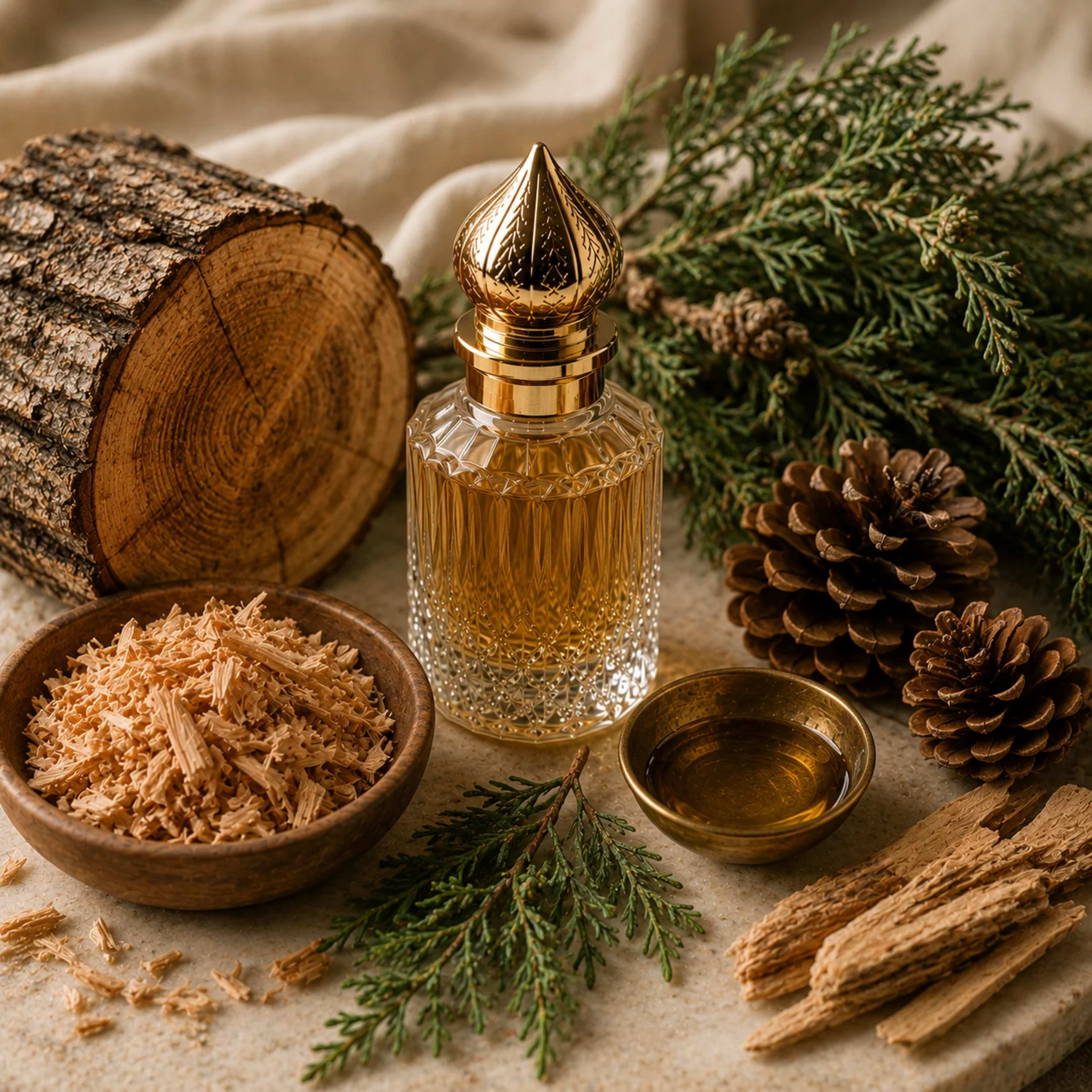
At a Glance
- Dry and clean rather than rich or heavy — the most approachable wood note
- Excellent fixative: adds longevity without dominating the blend
- Atlas, Virginia, and Himalayan varieties have distinct characters
- Works equally well in masculine, feminine, and unisex compositions
What It Smells Like
Clean, dry, and slightly pencil-shavings woody with a warmth that is distinctly different from heavier woods like vetiver or patchouli. Cedarwood has a faint sweetness in its base that prevents it from reading as harsh or cold. It is the wood note people wear without realising they are wearing a wood note.
Where It Comes From
Atlas cedarwood (Cedrus atlantica) from the Atlas Mountains of Morocco is the most prized for perfumery — its oil has a dry, slightly camphorous character with elegant warmth. Virginia cedarwood (Juniperus virginiana) from the eastern United States has a sharper, pencil-like quality. Himalayan cedarwood (Cedrus deodara) is also used, with a softer and slightly more resinous profile.
When to Wear It
All seasons and nearly every context — cedar is genuinely unisex and genuinely versatile. It reads well in office wear, casual contexts, and as a structural wood note in more complex compositions. In summer, cedar adds a pleasant dry freshness; in winter, it rounds out heavier oriental blends. It is particularly effective in Pakistani wear across the year given its clean rather than heavy character.
In Perfumery
Cedar is the workhorse of the perfumer's woody palette — it provides structure and dryness without demanding attention. It appears in the base of more fragrances than almost any other material, often doing invisible structural work. At Scents By Izhaan, cedarwood appears most often in our fresh and unisex formulas as a base-note anchor, giving composition a clean, confident landing.
Cedar (Cedarwood) Fragrances
Browse AllExplore the Collection
Fragrances featuring Cedar (Cedarwood)