Fragrance Ingredient
Oud (Agarwood)
One of the world's most prized fragrance materials — dark, resinous, and deeply alive.
At a Glance
- Base note — adds depth and long-lasting character
- High fixative strength: anchors an entire blend
- Pairs beautifully with rose, saffron, and amber
- Attar-forward: concentrated application suits it best
What It Smells Like
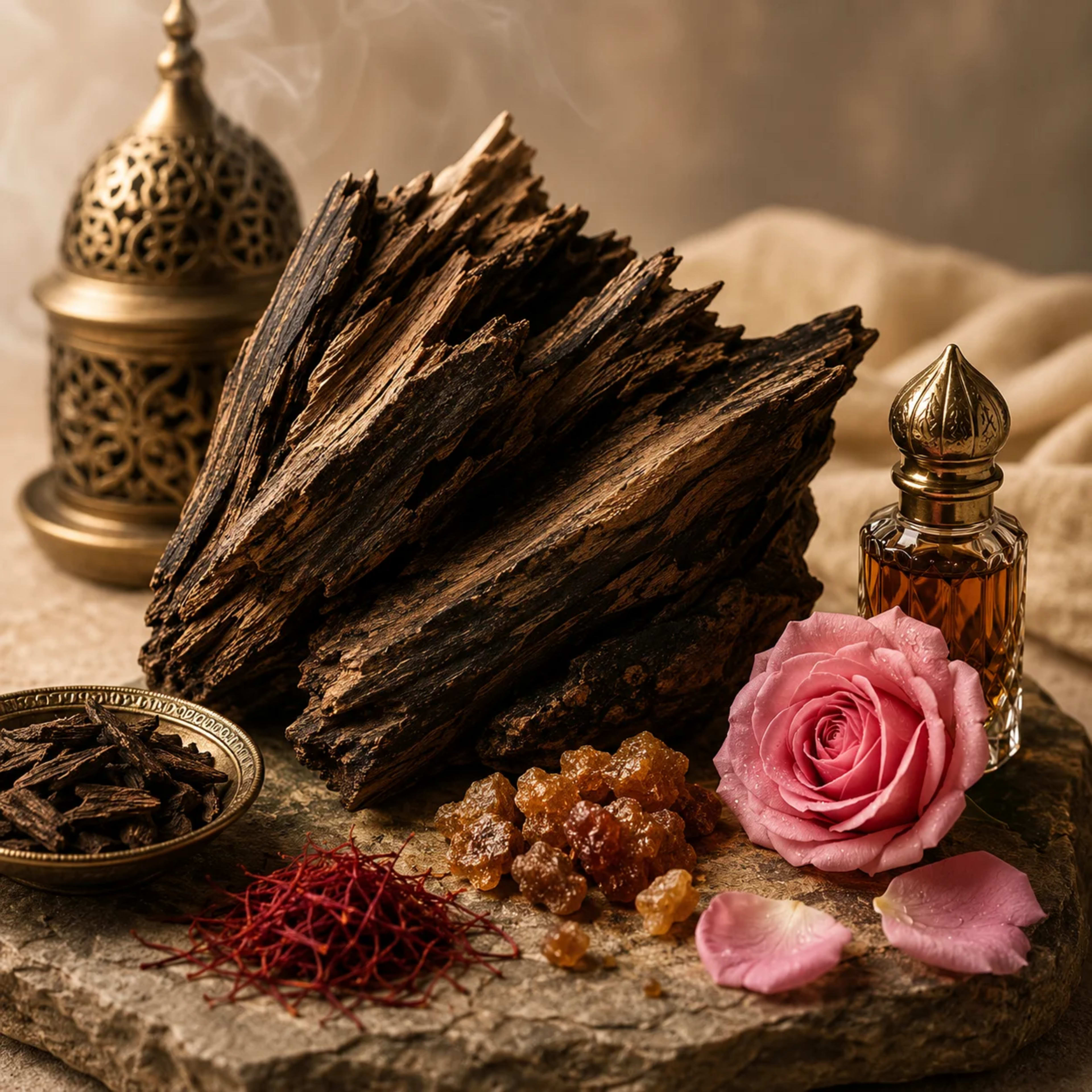
Deep, rich, and slightly animalic with an undercurrent of smoke and sweetness. No two oud materials smell identical — origin, age, and extraction method each shift its character. The finest express a warm, leathery complexity that unfolds for hours on the skin.
Where It Comes From
Oud comes from agarwood — the resin-saturated heartwood of Aquilaria trees infected by a specific mould. The trees are found primarily across Southeast Asia (Thailand, Cambodia, Vietnam, Malaysia) and the Middle East. Arabic and South Asian perfumery have prized it for centuries; it is central to Pakistani and Gulf fragrance culture.
When to Wear It
Evening wear, formal occasions, weddings, Eid celebrations, and the cooler months of the year. The richness of oud commands attention, so it suits moments where you want to leave a quiet but unforgettable impression. In Pakistan and the Gulf, it is traditionally applied before prayer and on important social gatherings.
In Perfumery
Oud occupies a different register than almost any other perfume material. It is not a top note that announces itself and fades — it is a presence that settles into the skin and deepens over hours. At Scents By Izhaan, oud appears across our attar and EDP lines, sometimes as the spine of a composition, sometimes woven with rose or saffron for a layered warmth that reads as distinctly Pakistani luxury.
Oud (Agarwood) Fragrances
Browse AllExplore the Collection
Fragrances featuring Oud (Agarwood)