
Fragrance Ingredient
Saffron
Golden spice with leathery depth — the luxury ingredient of Arabic and South Asian perfumery.
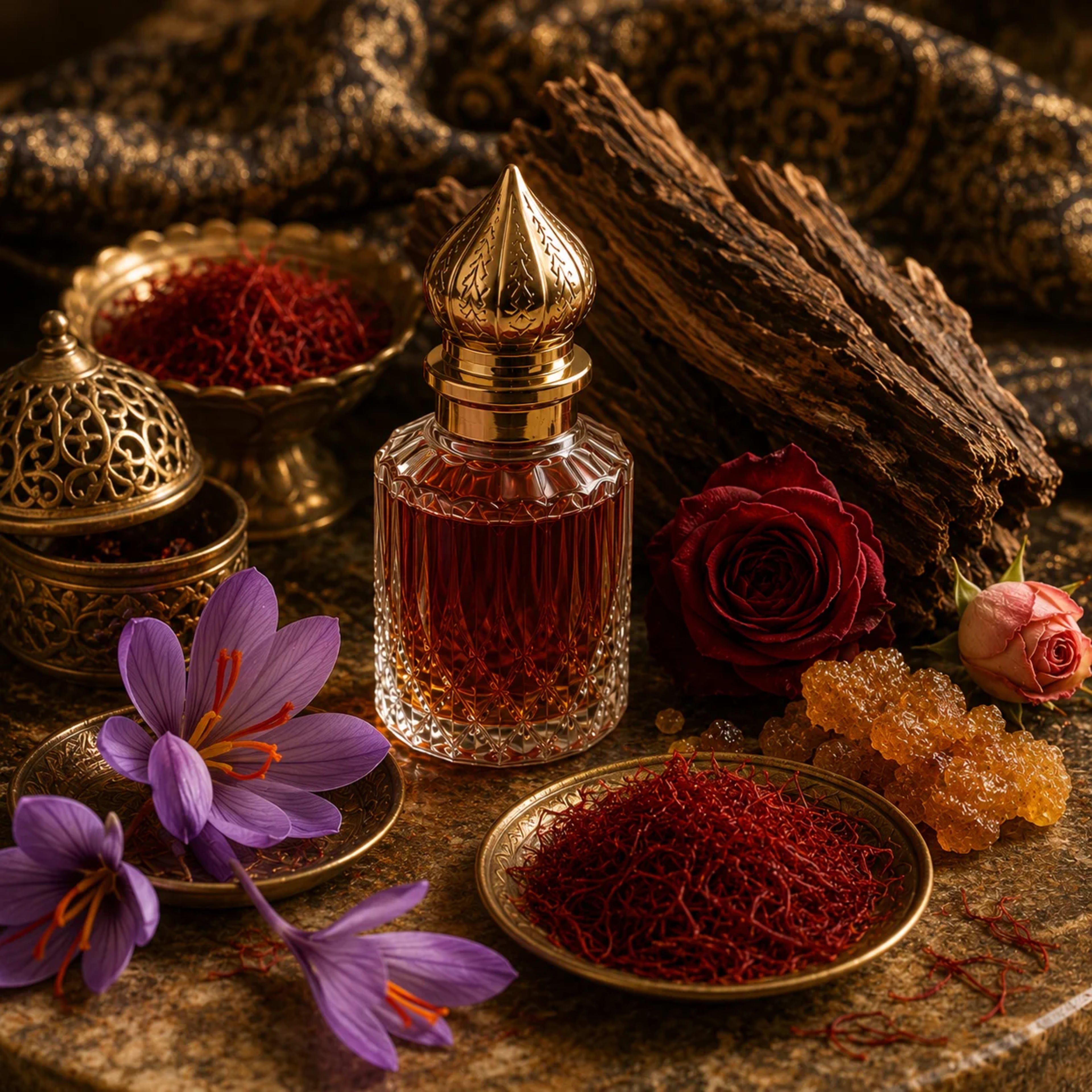
At a Glance
- Leathery, honeyed, and metallic-warm — unlike any other spice
- Pairs naturally with oud, rose, amber, and sandalwood
- Very high cost-per-gram: a mark of quality in a blend
- Formal and celebratory in character — not a daily note
What It Smells Like
Warm, leathery, and slightly honeyed with an earthy spice quality that resists easy comparison. Saffron in perfumery reads differently from saffron in food — it brings a dry, slightly bitter metallic edge alongside its warmth, which is why it works so well alongside oud and rose. It adds a sense of seriousness to a blend.
Where It Comes From
Iran produces the world's largest supply of saffron, primarily from the Khorasan region. Kashmir in northern India produces a smaller, highly prized harvest. Each stigma of Crocus sativus must be harvested by hand, which is why saffron remains one of the most expensive spices and fragrance materials by weight.
When to Wear It
Winter evenings, formal occasions, and moments that call for something considered and distinctive. Saffron is not a casual note — it brings weight and intention to a composition. In Pakistani and Gulf perfume culture, saffron-heavy blends are closely associated with celebration: weddings, Eid, and formal hospitality.
In Perfumery
Saffron has moved from a supporting role to a signature note in contemporary oriental perfumery. The best saffron-forward compositions sit somewhere between the spice market and the formal occasion — warm and celebratory without being overwhelming. At Scents By Izhaan, we use saffron primarily in our richer attar and EDP formulas, paired with oud, rose, or amber to create compositions that feel distinctly Pakistani in their sensibility.
Saffron Fragrances
Browse AllExplore the Collection
Fragrances featuring Saffron